
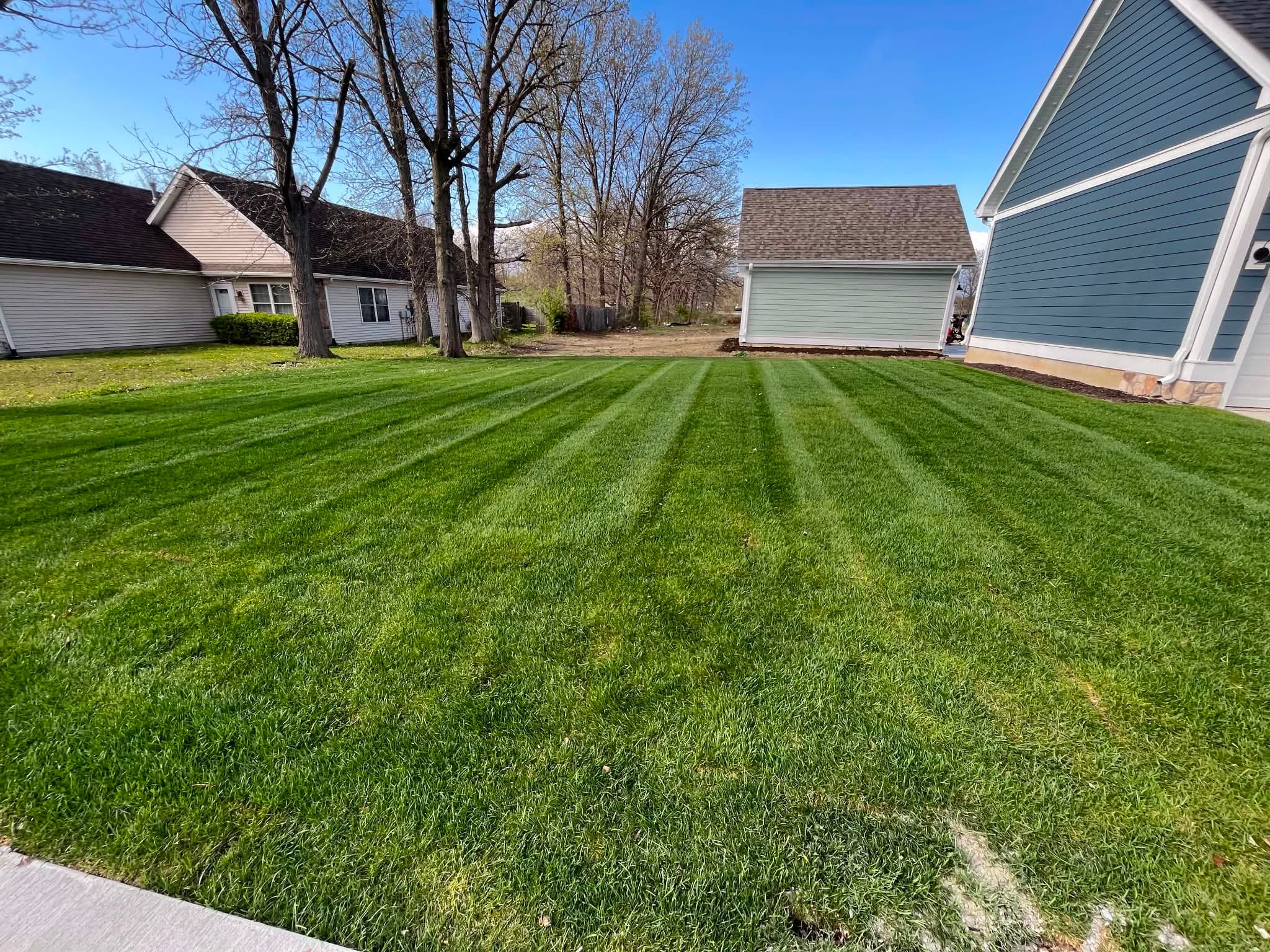
If you want a thicker, fuller lawn next year, fall overseeding is the highest-return thing you can do with a bag of grass seed. For cool-season grasses, which is what most Northwest Indiana lawns are, the window from early September through mid-October is when conditions are closest to ideal. The soil is still warm from summer, nights are cooling down, and the weeds that compete with new seedlings in spring are starting to slow. After mid-October, the window starts to close.
Why fall beats spring for overseeding
Spring overseeding sounds logical, but it puts new grass up against crabgrass and other annual weeds at their most competitive. It also means competing with the pre-emergent timing if you want to control weeds. Fall has fewer weeds, more predictable moisture, and cooler temperatures that keep the seed from drying out as fast. Seed planted in fall has all winter to settle and establishes faster in spring.
Prep matters more than the seed
Seed needs contact with soil to germinate, not thatch or grass clippings. The steps before seeding determine whether the money you spend on seed pays off:
- Mow lower than usual, around 1.5 to 2 inches, to expose the soil
- Aerate first if the soil is compacted, which most NW Indiana lawns are after summer
- Rake out any thick thatch that would prevent seed-to-soil contact
- Spread seed evenly, do not pile it, and lightly rake it into the top layer
Watering after seeding
New seed needs to stay moist until it germinates, which takes 7 to 21 days depending on the variety. In Valparaiso and Chesterton in October that often means running an irrigation zone or a sprinkler once or twice a day if there is no rain. Once you see germination, water less frequently but deeper to push roots down. The biggest failure with overseeding is letting new seed dry out in the first two weeks.
If you have missed the window this year
Mid-October is not a hard cutoff but it is close. Seed planted after the ground gets cold is called dormant seeding, it goes in now and waits until spring soil temps rise enough to germinate. It works, but you are taking a chance on birds, washout and inconsistent germination. The safest move is to get it down before the third week of October. If you are not sure whether your lawn needs overseeding or a more involved renovation, we can take a look and give you a straight answer.